
White Footed House Ant Control
- Home
- White Footed House Ant Control
White Footed House Ant (Technomyrmex Difficilis)
The White Footed House Ant is an invasive ant species that has become an increasing concern for homeowners and businesses across Canberra. While these ants do not bite or sting, their ability to form extremely large colonies makes them difficult to control once established. Effective White Footed House Ant control focuses on understanding their nesting behaviour, reproductive capacity, and foraging habits.
ACT Pest Control provides professional White Footed House Ant Control Canberra residents can rely on. Our services are designed to manage infestations safely and effectively while reducing the likelihood of reinfestation.
Appearance of the White Footed House Ant
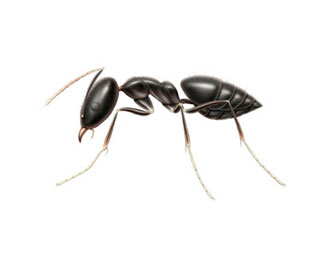
White Footed House Ants are small ants, measuring approximately 3 millimetres in length. They are dark brown to black in colour, with distinctive yellow-white feet, which give the species its common name.
Because of their small size and dark colouring, they are often mistaken for other household ants. However, the pale feet and the large numbers in which they appear are key indicators. Accurate identification is essential for effective White Footed House Ant Pest Control, as their behaviour and nesting habits differ significantly from many other ant species.
Life cycle and colony structure
The life cycle of the White Footed House Ant is one of the primary reasons this species is so difficult to eradicate. A single colony can house up to one million ants, making infestations particularly persistent.
Nearly half of the colony consists of fertile females, giving the species an enormous reproductive advantage. Fertile females are winged and larger than wingless females, allowing colonies to expand rapidly. Winged males mate once before dying, while wingless males are capable of mating multiple times.
Adult worker ants are wingless females and are responsible for foraging and food collection. These workers are the ants most commonly seen by homeowners, often in large numbers. This colony structure allows infestations to spread quickly, making early White Footed House Ant control critical.
Habits and nesting behaviour
White Footed House Ants do not form a single central nest. Instead, they spread into multiple satellite colonies across a property. This nesting strategy makes control more complex, as eliminating one nest does not necessarily resolve the infestation.
Ideal outdoor nesting locations include trees, particularly within trunks or galleries that may have been created by termites. They also nest under loose bark, plant debris, roof shingles, wall voids, fences, and outdoor furniture. Indoors, White Footed House Ants are most commonly found in kitchens, near rubbish bins, and around food storage or preparation areas.
Because of their widespread nesting behaviour, professional White Footed House Ant Control Canberra services are often required to address all affected areas effectively.
Feeding behaviour and attraction sources
White Footed House Ants are strongly attracted to sweet substances. Common food sources include plant nectar, flowers, and sweet human food residues. They are also attracted to aphids and mealy bugs, which produce honeydew that ants feed on.
Foraging trails can appear suddenly and in large numbers, particularly during warmer periods. These ants are most active at night when temperatures are high, which can make infestations seem to worsen overnight.
Removing visible food sources alone is rarely enough to resolve an infestation. Effective White Footed House Ant Pest Control targets the colony rather than just foraging ants.
Why White Footed House Ant infestations persist
Many infestations persist because DIY treatments fail to address the colony’s size and satellite nesting structure. Killing visible ants may reduce activity temporarily, but colonies quickly recover and re-establish trails.
Because White Footed House Ant colonies contain large numbers of fertile females, incorrect treatments can actually cause colonies to spread further. Professional White Footed House Ant control uses targeted methods designed to disrupt reproduction and reduce colony size over time.
Our approach to White Footed House Ant control
ACT Pest Control delivers reliable White Footed House Ant Control Canberra homeowners trust through a structured and strategic approach. We begin with an inspection to identify foraging patterns, nesting locations, and contributing factors such as moisture or food sources.
Treatments are applied strategically to interrupt foraging activity and deliver control agents back to nesting areas. This targeted approach improves effectiveness and reduces the risk of colony fragmentation.
Our methods are selected with safety in mind and are suitable for residential and commercial environments.
Preventing future White Footed House Ant activity
Successful White Footed House Ant Pest Control includes preventative measures to reduce reinfestation risk. Sealing entry points, managing vegetation near buildings, and addressing aphid infestations all help reduce attractants.
Our technicians provide tailored advice specific to Canberra properties, helping homeowners maintain long-term protection against White Footed House Ants.
When to seek professional White Footed House Ant control
If you notice large numbers of ants appearing repeatedly, particularly in kitchens or outdoor entertaining areas, professional White Footed House Ant Control Canberra services are recommended. Early intervention prevents colonies from expanding further and reduces long-term disruption.
ACT Pest Control services Canberra and surrounding suburbs, providing dependable White Footed House Ant Pest Control for residential and commercial properties.
Contact ACT Pest Control
If you are dealing with a White Footed House Ant infestation, ACT Pest Control is ready to assist. We provide professional inspections and effective White Footed House Ant Control Canberra residents trust for lasting results.
Call 1300 022 122 or email info@actpestcontrol.com.au to request a quote or arrange an inspection.
We service the ACT and surrounding areas
Belconnen
Canberra City
Dickson
Fyshwick
Gungahlin
Hume
Jerrabomberra
Kingston
Kippax (Holt)
Majura
Manuka
Mitchell
Queanbeyan
Tuggeranong
Weston Creek
Woden Valley

Quick links
News & Blog

September 28, 2025

September 28, 2025

September 28, 2025
Social media
Copyright © 2026 ACT Pest Control.