
Sugar Ant Control
- Home
- Sugar Ant Control
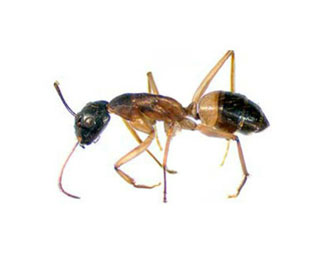
Sugar Ant (Camponotus Consobrinus)
Sugar Ants are a well-known ant species commonly found throughout Canberra and surrounding regions. While they are often seen outdoors and are less likely to invade homes compared to some other ants, their large size, visible activity, and attraction to sweet food sources can still cause concern for homeowners and businesses. Effective Sugar Ant control focuses on understanding their nesting behaviour, feeding habits, and activity patterns.
ACT Pest Control provides professional Sugar Ant Control Canberra residents can rely on. Our services are designed to manage infestations safely while minimising disruption to the surrounding environment.
Appearance of Sugar Ants
Sugar Ants vary greatly in shape, size, and colour, making them one of the more visually distinctive ant species. Adults range in size from approximately 2.5 to 15 millimetres, and they are among the most visible ants due to their larger size and often bright or contrasting colouring.
This variation in appearance can sometimes make identification difficult. However, their size and movement patterns are often enough to distinguish them from smaller household ants. Correct identification is important for effective Sugar Ant Pest Control, as treatment strategies depend on species behaviour.
Life cycle of the Sugar Ant
The Sugar Ant life cycle consists of four distinct phases: egg, larva, pupa, and adult. Eggs hatch into larvae, which are fed and cared for by worker ants. After the larval stage, ants pupate before emerging as adults.
The duration of each stage depends on environmental factors such as temperature, food availability, and nesting conditions. Because colonies can persist for long periods, professional Sugar Ant control may be required if activity becomes problematic.
Habits and nesting behaviour
Sugar Ants are highly adaptable nesters and can establish colonies in a wide variety of locations. Common nesting sites include holes in wood, tree roots, twigs of shrubs, soil, between rocks, and landscaped garden areas.
Their preference for outdoor nesting means Sugar Ants are most commonly encountered in gardens, lawns, and near vegetation. They are often seen moving along tree trunks, fences, and garden beds in search of food.
Although Sugar Ants can be active during the day, they are most active at night, when foraging activity increases. This nocturnal behaviour can result in sudden surges of visible ants during warmer evenings.
Feeding behaviour
Sugar Ants have a varied diet. They feed on dead and live insects and also consume household waste when available. As their name suggests, they are particularly attracted to sweet foods, including sugary residues, plant nectar, and discarded food scraps.
Their attraction to sweet substances can lead them into outdoor entertaining areas, bins, and occasionally inside buildings if food sources are accessible. While they rarely enter houses, infestations can occur if conditions are favourable.
Effective Sugar Ant Pest Control focuses on reducing attractants as well as managing nesting sites.
Defensive behaviour and risks
Sugar Ants are unable to sting, but they possess strong mandibles and can bite if handled or disturbed. In addition to biting, they can spray acid from their abdomens as a defensive mechanism to deter predators.
While this behaviour is not generally dangerous to humans, it can cause discomfort and make Sugar Ant activity unpleasant in outdoor areas. Professional Sugar Ant Control Canberra services help reduce these encounters safely and effectively.
Why Sugar Ant activity becomes a problem
Sugar Ant activity often increases during warmer months when food sources are abundant and colonies are actively foraging. Large numbers of visible ants can be unsettling, particularly in gardens, patios, and near entry points.
DIY treatments often focus on killing visible ants without addressing the nest. This approach may reduce activity temporarily but rarely provides long-term control. Effective Sugar Ant control requires targeted treatment of nesting areas and management of environmental factors.
Our approach to Sugar Ant control
ACT Pest Control delivers reliable Sugar Ant Control Canberra homeowners trust through a structured and environmentally responsible approach. We begin with an inspection to identify nesting locations, foraging trails, and contributing factors such as food sources or moisture.
Treatments are applied strategically to manage ant activity while minimising impact on non-target areas. Our approach focuses on long-term control rather than short-term suppression.
Where necessary, we provide advice on habitat modification to reduce the likelihood of reinfestation.
Preventing future Sugar Ant activity
Successful Sugar Ant Pest Control includes preventative measures to limit attractants and nesting opportunities. Managing garden debris, sealing entry points, and keeping food waste secure all help reduce ant activity.
Maintaining clean outdoor areas and reducing sweet residues on surfaces can significantly decrease foraging behaviour. Our technicians provide tailored advice specific to Canberra properties to support ongoing prevention.
When to seek professional Sugar Ant control
If Sugar Ant activity becomes persistent or disruptive, particularly in outdoor living areas or around buildings, professional Sugar Ant Control Canberra services are recommended. Early intervention helps prevent colonies from expanding and reduces ongoing nuisance.
ACT Pest Control services Canberra and surrounding suburbs, providing dependable Sugar Ant Pest Control for residential and commercial properties.
Contact ACT Pest Control
If you are experiencing Sugar Ant activity on your property, ACT Pest Control is ready to assist. We provide professional inspections and effective Sugar Ant Control Canberra residents trust for reliable results.
Call 1300 022 122 or email info@actpestcontrol.com.au to request a quote or arrange an inspection.
We service the ACT and surrounding areas
Belconnen
Canberra City
Dickson
Fyshwick
Gungahlin
Hume
Jerrabomberra
Kingston
Kippax (Holt)
Majura
Manuka
Mitchell
Queanbeyan
Tuggeranong
Weston Creek
Woden Valley

Quick links
News & Blog

September 28, 2025

September 28, 2025

September 28, 2025
Social media
Copyright © 2026 ACT Pest Control.