
Fire Ant Pest Control
- Home
- Fire Ant Pest Control
Fire Ant (Solenopsis Spp)
Fire Ants are one of the most aggressive and damaging ant species encountered in urban and rural environments. While not widespread in all parts of Australia, Fire Ant activity is treated very seriously due to the risks they pose to people, pets, agriculture, and property. Effective Fire Ant control focuses on rapid identification, safe management, and professional treatment to prevent spread and reduce risk.
ACT Pest Control provides professional Fire Ant Control Canberra residents and property managers can rely on. Our services are designed to manage Fire Ant activity safely while reducing the risk of stings and long-term infestation.
Appearance of Fire Ants
Fire Ant colonies consist of different castes, each with distinct characteristics. Fire Ant queens are significantly larger than workers and measure approximately 15 millimetres in length. Worker ants are smaller, typically measuring between 3 and 6 millimetres.
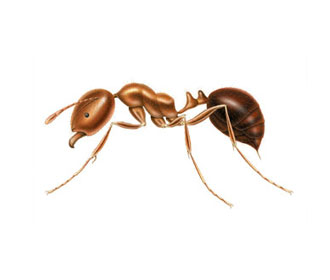
Fire Ants are coppery-brown in colour on the head and body, with a darker abdomen. One of the most distinctive identifying features of Fire Ants is their two-segment antennal club, which is clearly visible when viewed from the front, particularly on reproductive females.
Correct identification is critical for Fire Ant Pest Control, as Fire Ants can be confused with other ant species without close inspection.
Life cycle of the Fire Ant
The life cycle of the Fire Ant begins after swarming and mating. Queens and fertile males mate while airborne, usually in mid to late summer. After mating, males perish, while the fertilised queen searches for a suitable nesting site.
Once established, the queen can lay up to 125 eggs during late spring. Larvae hatch within 8 to 10 days, followed by a pupal stage lasting 9 to 16 days. During early colony development, larvae are fed on secretions from the queen’s salivary glands and broken-down wing muscles.
When the first worker ants emerge, the queen’s role shifts back to egg production. At this stage, she can lay up to 1,500 eggs per day. Worker ants take over nest construction, foraging, and care of the developing larvae. Fertile males are produced later in the season as the colony matures.
This rapid reproductive capacity makes professional Fire Ant control essential to prevent colonies from expanding quickly.
Habits and behaviour of Fire Ants
Fire Ant workers are highly active foragers with a broad diet. They feed on dead animals such as insects, earthworms, and small vertebrates. Workers also collect honeydew and actively forage for sweet foods, proteins, and fats.
Fire Ant nests are highly visible and distinctive. A nest mound can reach up to 40 centimetres in height and is commonly found next to objects on the ground, such as logs, rocks, or garden structures. These mounds often have no visible entrance hole, which can make them difficult to identify for untrained observers.
Fire Ants are known for their aggressive defensive behaviour. When disturbed, they react rapidly and will swarm, delivering multiple painful stings.
Fire Ant stings and safety risks
Fire Ant stings are extremely painful and can result in a raised pustule forming approximately 48 hours after the sting. Multiple stings can occur within seconds if a nest is disturbed. For some individuals, stings may cause severe allergic reactions and require medical attention.
Because of the risk to people, pets, and livestock, professional Fire Ant Control Canberra services are strongly recommended when activity is suspected.
Why Fire Ant infestations are a serious concern
Fire Ants are considered a major agricultural and urban pest. They damage crops, disrupt lawns and gardens, and invade residential properties both outdoors and indoors. Their presence can restrict land use and create ongoing safety hazards.
Due to their aggressive behaviour and rapid reproduction, Fire Ant infestations require immediate and professional management. DIY treatments are not suitable and may increase the risk of stings or spread.
Our approach to Fire Ant control
ACT Pest Control provides safe and effective Fire Ant Control Canberra property owners trust through a structured and compliant approach. We begin with careful assessment to confirm activity and identify nest locations.
Treatments are applied strategically to eliminate colonies while minimising risk to people, pets, and surrounding environments. Our methods focus on disrupting colony structure and reproduction to prevent reinfestation.
Because Fire Ants are a high-risk species, all treatments are conducted with strict safety protocols.
Preventing future Fire Ant activity
Ongoing monitoring and early detection are key to Fire Ant Pest Control. Identifying new mound activity early helps prevent colonies from becoming established.
Our technicians provide advice on recognising Fire Ant signs and maintaining properties in a way that reduces favourable nesting conditions.
When to seek professional Fire Ant control
Professional Fire Ant Control Canberra services should be sought immediately if aggressive ants, visible mounds, or painful stings are observed. Prompt treatment reduces the risk of spread and helps protect people, pets, and property.
ACT Pest Control services Canberra and surrounding suburbs, providing reliable Fire Ant Pest Control for residential, commercial, and rural properties.
Contact ACT Pest Control
If you suspect Fire Ant activity on your property, ACT Pest Control is ready to assist. We provide professional inspections and effective Fire Ant Control Canberra residents trust for safe and compliant management.
Call 1300 022 122 or email info@actpestcontrol.com.au to request a quote or arrange an inspection.
We service the ACT and surrounding areas
Belconnen
Canberra City
Dickson
Fyshwick
Gungahlin
Hume
Jerrabomberra
Kingston
Kippax (Holt)
Majura
Manuka
Mitchell
Queanbeyan
Tuggeranong
Weston Creek
Woden Valley

Quick links
News & Blog

September 28, 2025

September 28, 2025

September 28, 2025
Social media
Copyright © 2026 ACT Pest Control.